
Simulated Use Testing: The Art of the Realistic Fake
A photo story about fake blood, fake skin, fake patients - and one very real arm.
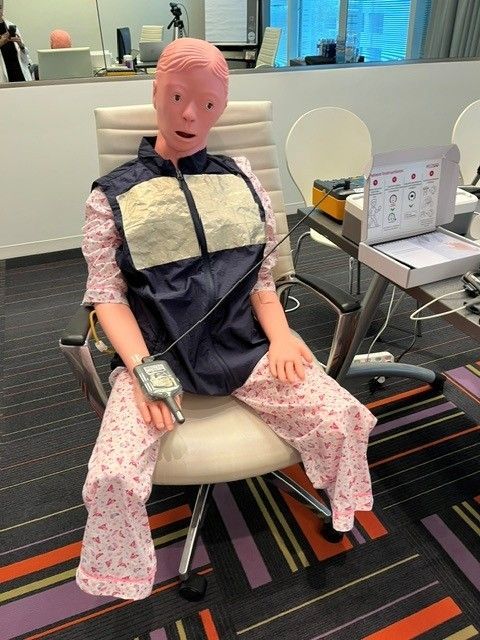
EXHIBIT 01 · THE FULL-BODY PATIENT
Meet the most patient participant in the building. He never flinches, and he never needs a snack break.
Here's a problem you don't think about until it's yours. You need to watch 20 people inject a real prefilled syringe, under realistic conditions, exactly the way a nurse or patient would at home. And you absolutely cannot let anyone inject anything into an actual human being.
That's the quiet puzzle at the heart of simulated use testing. FDA expects usability studies for medical devices to be as realistic as possible. Ethics, common sense, and every review board on the planet expect no participant to be harmed. The space between those two requirements is where usability researchers get creative.
What follows is a photo story from real studies.
Why Simulated Use Testing Has to Feel Real
FDA's human factors guidance asks a simple question of every summative usability study: did the test conditions represent actual use? If participants handle the device differently because the setup felt fake, the data is suspect. A participant who knows there's no needle behaves differently than one who feels the stakes.
Where the risk actually lives
The risk isn't abstract. Autoinjectors and prefilled syringes fire real needles. Infusion devices puncture skin. Surgical tools cut. In a usability study, participants may be everyday patients, caregivers, or nurses, and some of them will make mistakes. That's the point. Simulated use testing exists so mistakes are safe to make.
The prop department nobody talks about
So every study comes with a second, hidden design challenge: building or sourcing stand-ins realistic enough to fool the hands, if not the eyes. Some are high-tech. Some cost less than lunch.
The $2 Injection Site: Oranges and a Numbered Grid
Nurses have practiced injections on oranges for generations. The peel gives just enough resistance, and the flesh underneath absorbs the dose. It remains one of the cheapest, most effective simulations in the business.
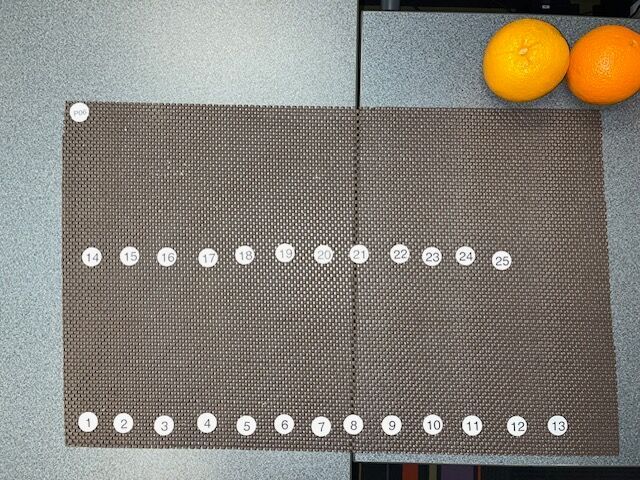
EXHIBIT 02 · INJECTION GRID + TWO ORANGES
Twenty-five numbered targets, one textured pad, and the produce aisle
For one prefilled syringe study, the goal was to document the effectiveness of the automatic safety system that is designed to lock in place to cover the needle after administration of the product.. The client wanted to provide this documentation with 500 devices. So, 20 participants were recruited to use the prefilled syringe 25 times each for a total of 500 injections.
How to keep up with each of the prefilled syringes? The solution was a numbered grid pad: 25 marked targets on a textured mat that indicate 1 -25 so that the user could place the syringe in the right spot after each use. Participants worked through the sequence naturally, using naval oranges for the injections, and the team could tie every correct or incorrect safety mechanism deployed for every syringe. No patient was put at risk. Full data integrity. Total cost: a mat, some stickers, and a trip to the produce aisle.
🍊 STUDY PROP PLAYBOOK: Before you buy a $4,000 simulator, ask what the participant's hands actually need to feel. If the critical task is grip, angle, and firing force, a naval orange may capture it faithfully, and your budget survives for the props that genuinely have to be high-fidelity.
An Arm That Bleeds on Cue
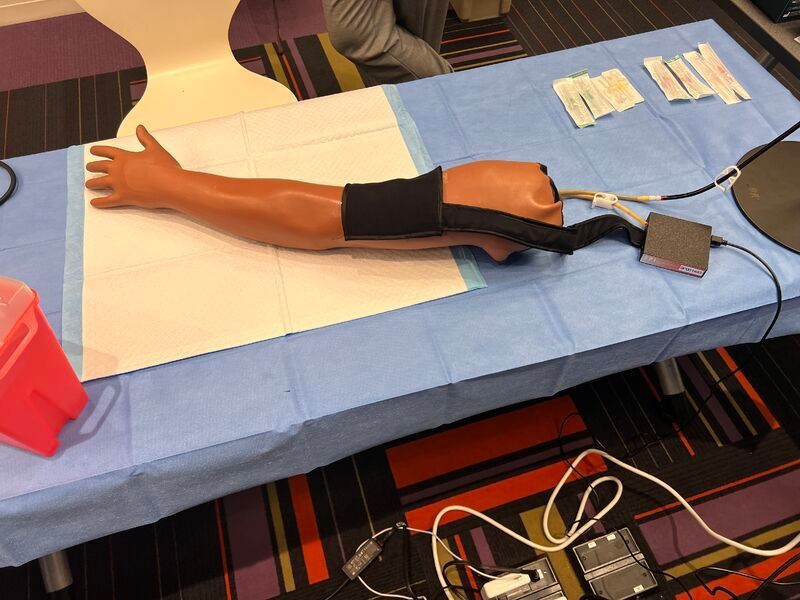
EXHIBIT 03 · SYNTHETIC ARM, FAKE BLOOD SUPPLY
The tubing runs to a reservoir off-table. Puncture the right spot and it bleeds — convincingly.
When Only Real Tissue Will Do
And then there are studies where no synthetic material is realistic enough. For one clinician-focused study, the team worked with a real cadaver arm — donated tissue, handled under strict protocols, gloved hands and full clinical draping throughout.
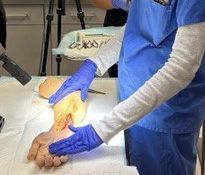
EXHIBIT 04 · THE REAL ARM
Donated tissue, strict protocols. For expert hands, nothing synthetic is quite convincing enough.
Different studies, different user groups. A patient practicing self-injection needs a safe target. A surgeon or vascular specialist evaluating a device needs tissue that responds like tissue, because their expert hands will detect anything less. Matching the simulation's fidelity to the user group is one of the judgment calls that separates a defensible summative usability testing program from a checkbox exercise.
In Carol Barnum's words, the question the team asks about every prop is the same: what does this participant need to believe their behavior is real?
A Patient Who Never Gets Tired
Some scenarios need more than a body part. They need a whole patient. Someone to be dressed, positioned, spoken to, and treated. Enter the full-body manikin: pajamas, seated upright in a chair, ready for engagement with the healthcare professional.
A manikin lets participants rehearse the entire care scenario, including the awkward physical realities: working around clothing, positioning a device on a seated body, managing cables and components. And it does all that without asking a human actor to sit through dozens of sessions or absorb any risk from the device itself.
🧵 WORTH SITTING WITH:
Realism isn't one thing. The oranges are low-fidelity and completely convincing to the hands. The manikin is high-fidelity and obviously artificial to the eyes. Both produce valid data, because each one is realistic in the exact dimension the task demands. "How real does it look?" is the wrong question. "How real does it behave?" is the right one.
Skin You Can Strap On
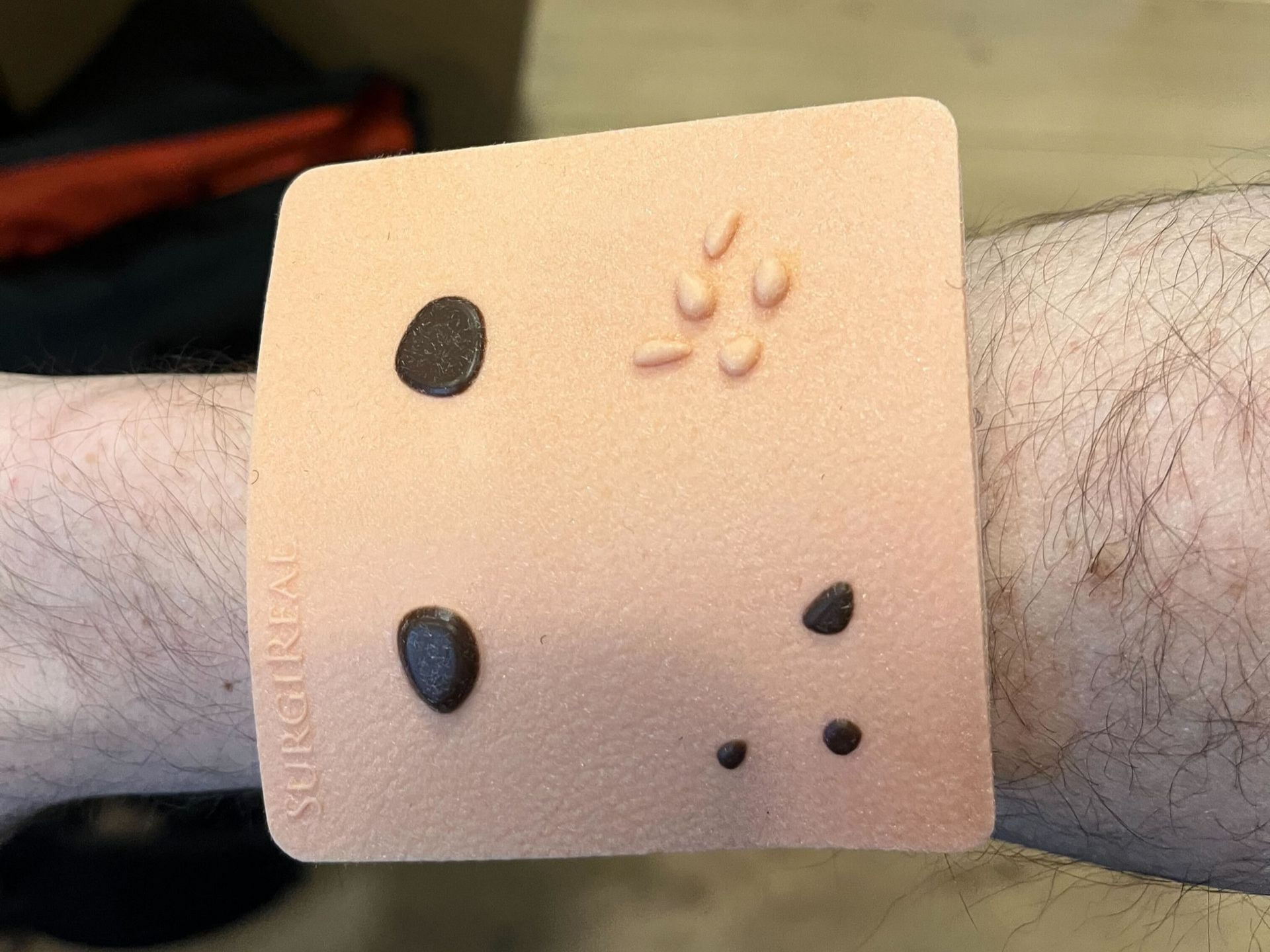
EXHIBIT 05 · WEARABLE SKIN, IMPERFECTIONS INCLUDED
Real skin isn't a blank canvas, so the simulation isn't either.
Why the moles and skin tags? Because real skin isn't a blank canvas. Devices that adhere to skin will meet freckles, moles, skin tags, and hair in the real world. A pad with those imperfections built in lets participants make genuine placement decisions (avoid the mole or cover it?) on a living, moving arm, with zero risk to the person underneath.

EXHIBIT 06 · THE PAD IN SESSION
A participant works through the instructions for use, simulated skin strapped to his forearm, while the moderator watches what the instructions can't control.
Faking It, For Real
This is where experience shows. Few teams match UX Firm's approach to medical device usability testing when it comes to engineering these study conditions. The firm has spent decades supporting research that provides simulations realistic enough to satisfy both the participants using them and the FDA reviewers who later scrutinize the human factors validation data they produce.
Every prop in these photos exists for the same reason: real people need to interact with real devices before those devices ever touch a real patient. The fakes make honest data possible.
If you're planning a study and wondering how to simulate the risky part of your device's use, that's a conversation worth having early.
Talk to the usability experts at UX Firm before the protocol is locked.
FAQs
What's the best way to plan simulated use testing for a medical device?
Start with your use-related risk analysis and identify the critical tasks, then design the simulation around what participants must physically experience to perform those tasks realistically. Match fidelity to the user group: patients may only need a convincing injection pad, while clinicians often require anatomical or tissue-based models. Document your rationale, since FDA reviewers will ask how your test conditions represented actual use.
Does FDA support simulated use on real people?
FDA's human factors guidance supports validation testing under simulated use conditions precisely so participants are not exposed to actual harm. The device itself is typically real or production-equivalent, but the risky part of the interaction, like the injection or the catheterization, is simulated. Actual clinical use is evaluated separately through clinical studies, not usability testing.

Carol Barnum
Carol brings her academic background and years of teaching and research to her work with clients to deliver the best research approaches that have proven to produce practical solutions. Carol’s many publications (6 books and more than 50 articles) have made a substantial contribution to the body of knowledge in the UX field. The 3rd edition of her award-winning handbook Usability Testing Essentials is due to be published in 2027.